A visual programming language
Think in diagrams — get code
Falang turns a readable flowchart into a real result: compilable code in five languages, Arduino firmware, or a running automation wired to real integrations. No fighting the syntax — and no tangle of wires.
- Open source · AGPL-3.0
- Windows · macOS · Linux · web
- Built on the DRAKON language
Products
One language, three products
For code, for hardware and for business. All three run on the same diagram engine — once you can read one Falang diagram, you can read them all.
FalangFlow
Automation you can see
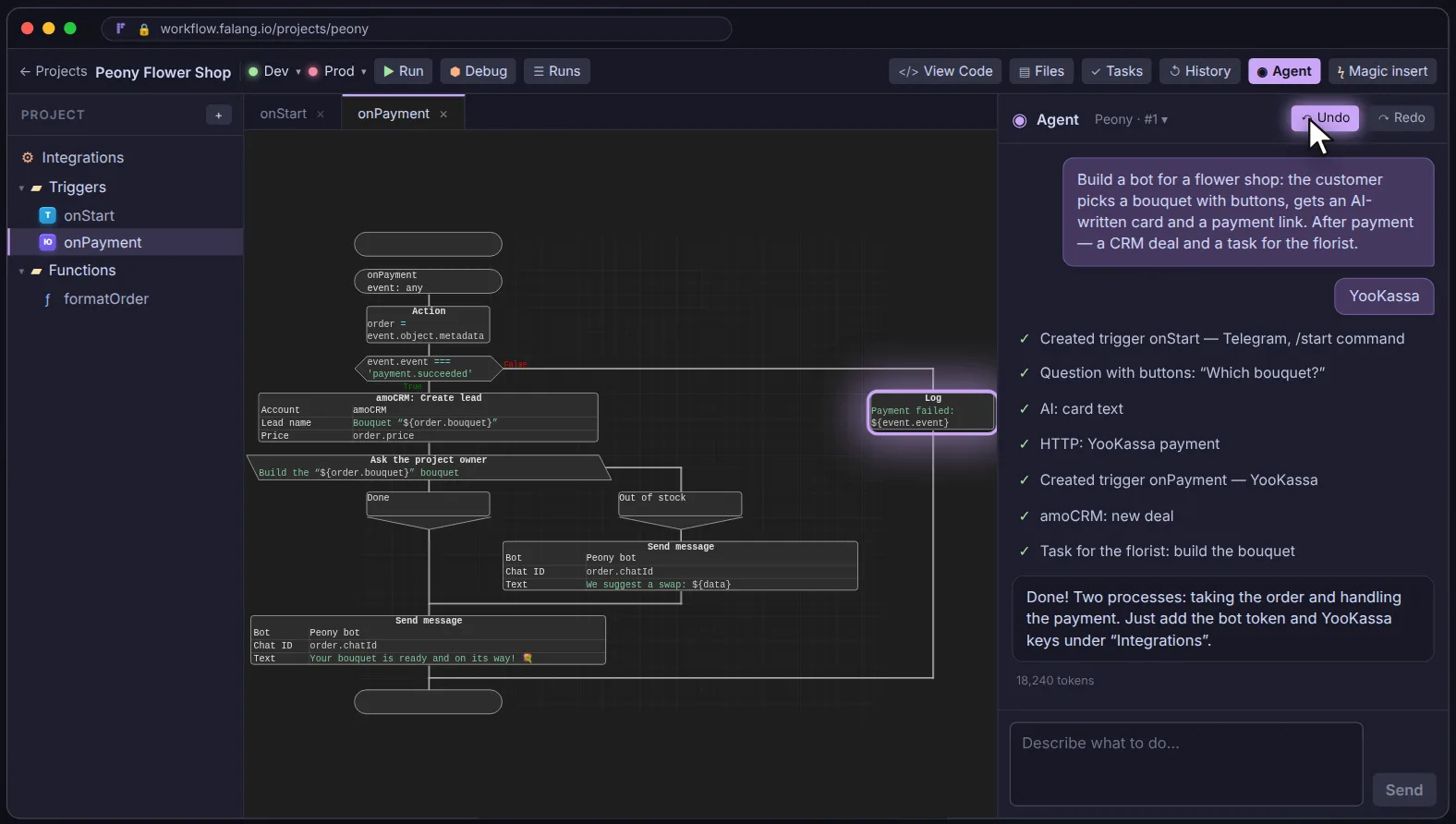
Bots, CRMs, payments and marketplaces as diagrams that read like instructions. Durable execution on Temporal, 84 integrations and an AI agent that builds the process from a description.
- Telegram, OpenAI, Stripe, HubSpot…
- Processes survive crashes
- AI agent and magic node
FalangSketch
A visual IDE for algorithms and code
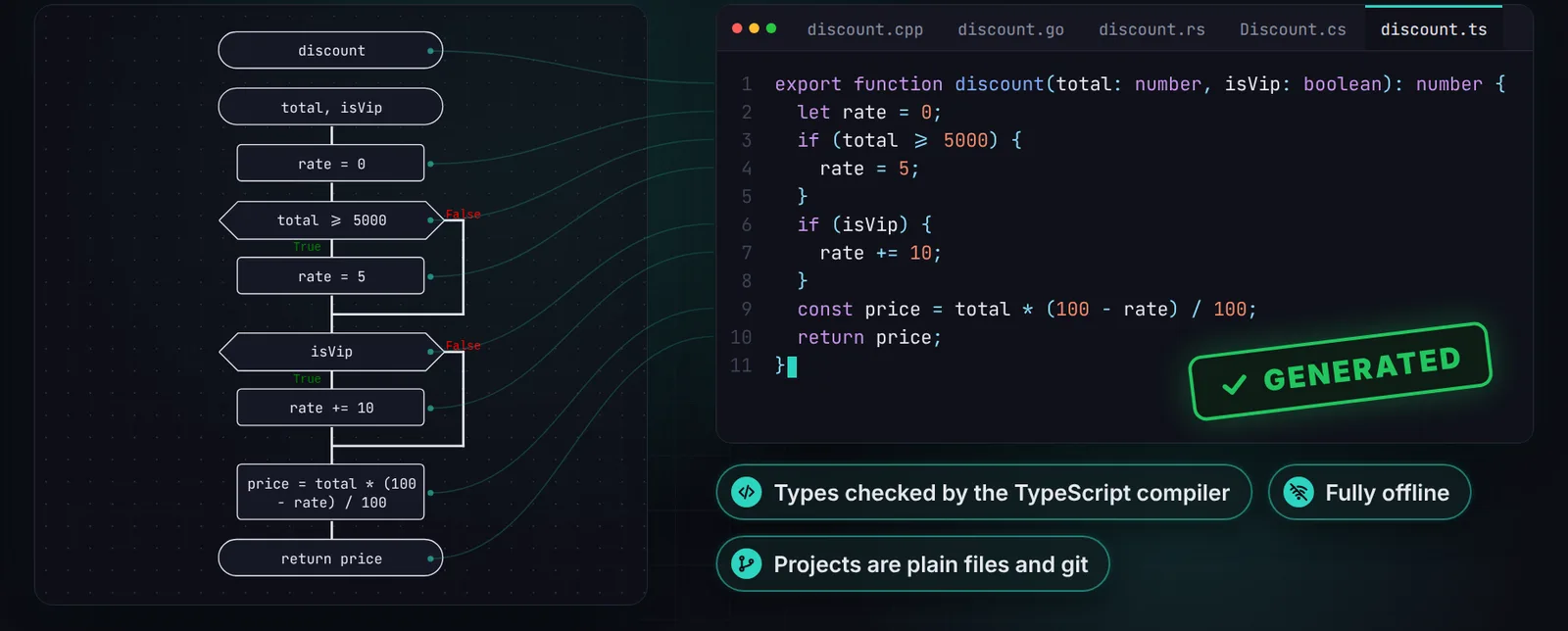
Build algorithms as flowcharts and get real source code in C++, Go, Rust, C# and TypeScript. Fully offline, projects are plain files.
- Code generation for 5 languages
- Type checking as you type
- Text diagrams, silhouettes, mind maps
FalangDuino
Arduino without fighting C++ syntax
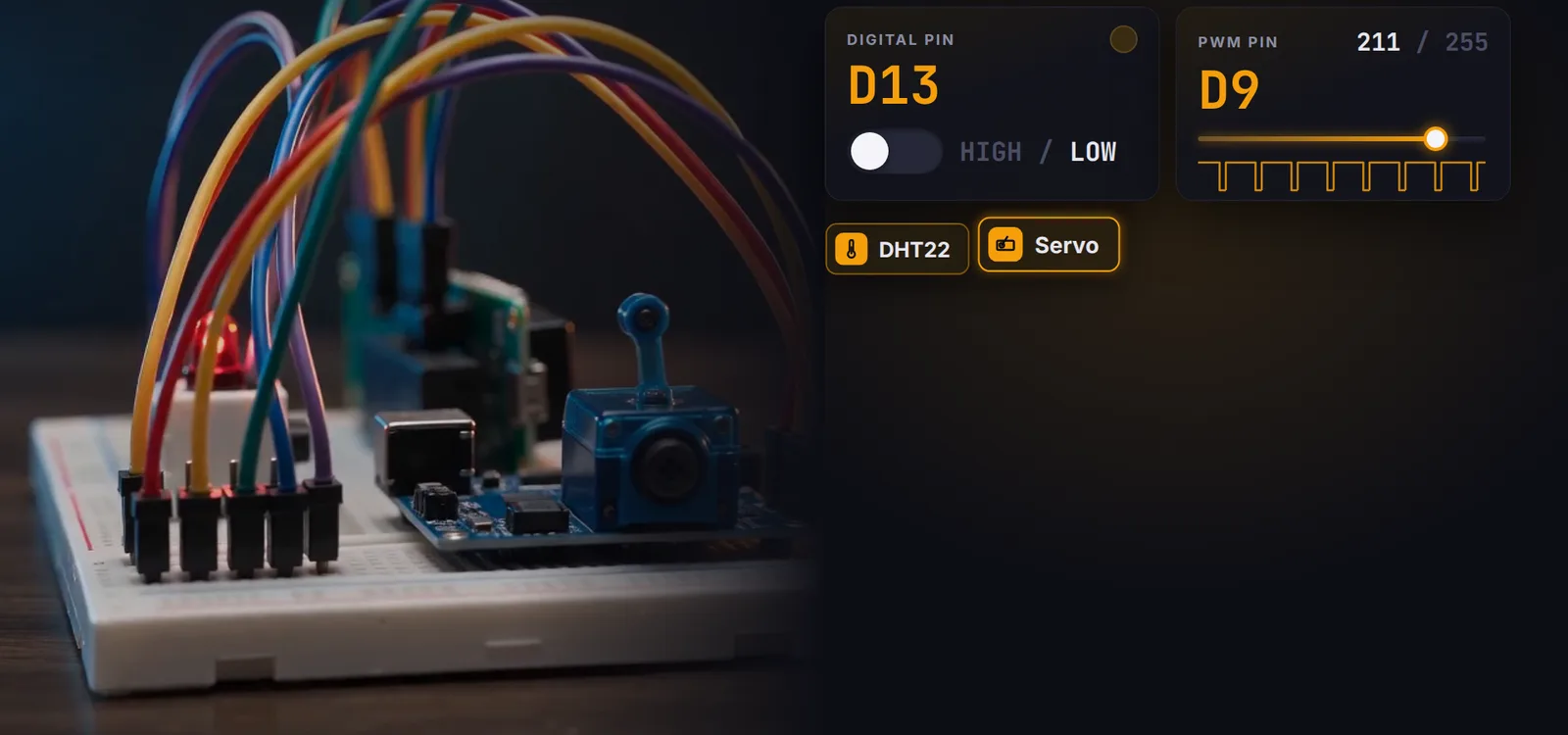
Draw setup() and loop() as diagrams, drive pins and sensors with ready-made blocks, flash the sketch to a board and debug it right on the hardware.
- Pins as switches and sliders
- A debugger on the live board
- Built-in and custom drivers
Why Falang
Complex logic that still reads clearly
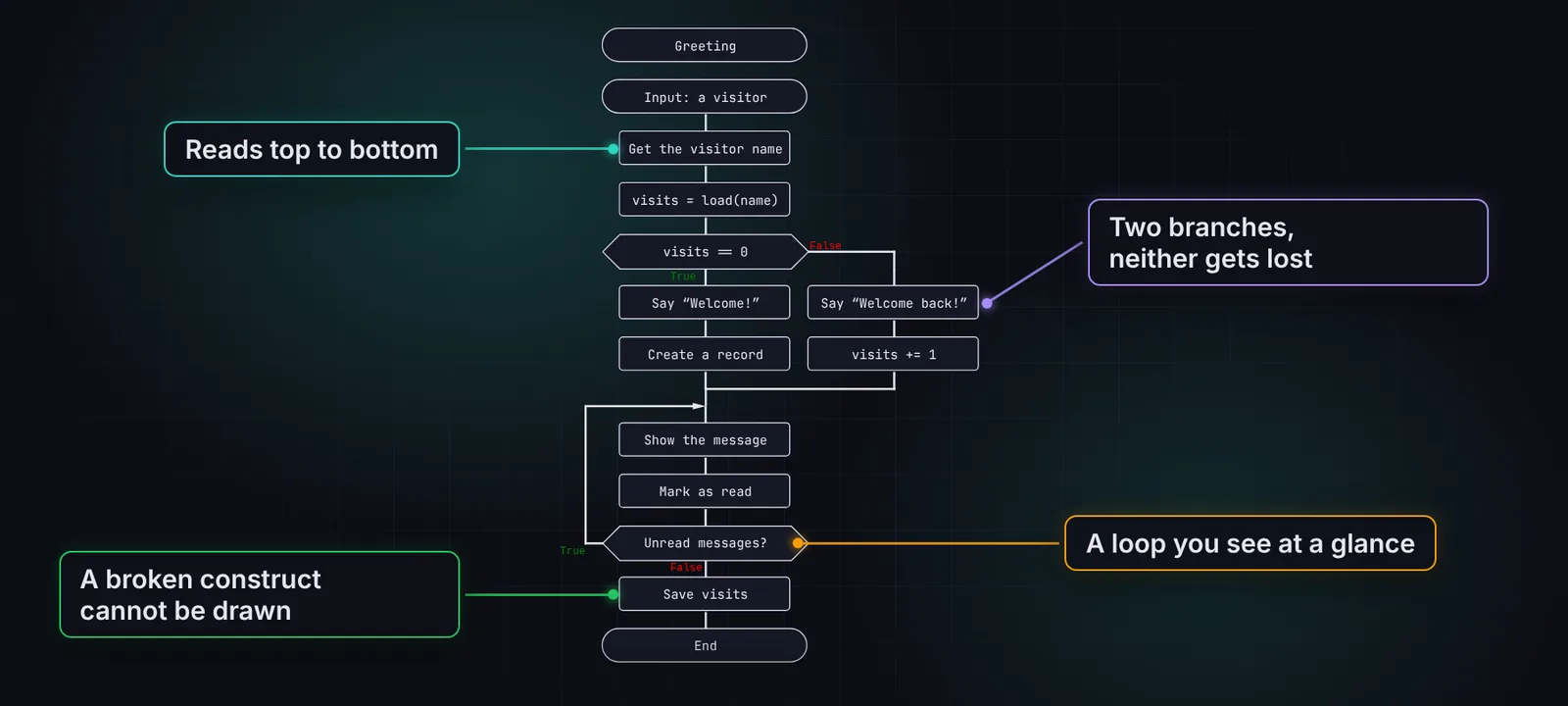
In a typical visual builder, blocks are joined by wires, and a month later the diagram is a web even its author can’t follow. Falang follows the rules of DRAKON: the main path runs straight down one vertical, branches go to the right, and every exit has its own line to its target.
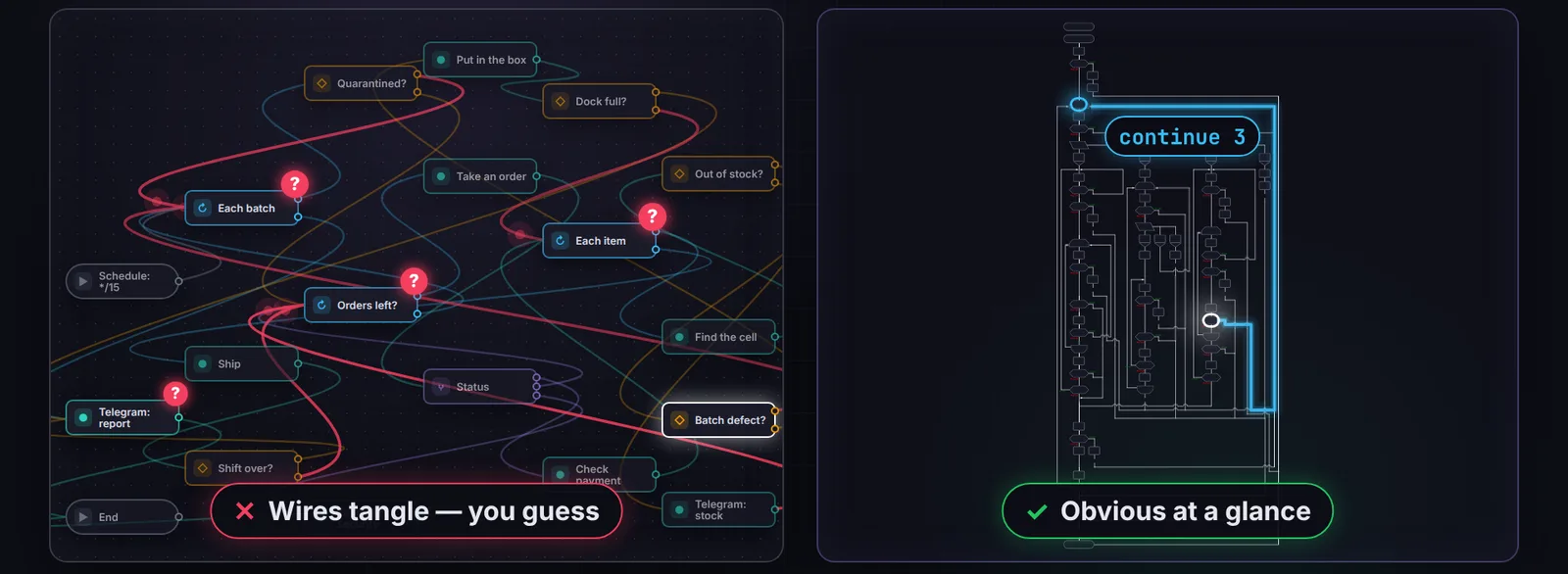
Reads top to bottom
A diagram reads like a set of instructions — step by step, no darting around the canvas.
Mistakes can’t be drawn
The editor lays blocks out for you and won’t let you build a broken construct — branches never get lost.
Every jump is visible
continue, break and return several levels up each get their own line, even in deeply nested loops.
AI built in
Describe it in words — the diagram builds itself
AI in Falang doesn’t write opaque code: it draws the same blocks you do, with the same actions. Every step is visible on the canvas, and any of them can be undone.
An agent in the chat
Describe the task — the agent asks what it needs to know, creates documents, wires up integrations and builds the diagram right in front of you.
- Clarifying questions with ready-made answers
- One request is one undo step
- Any OpenAI-compatible model, including a local one
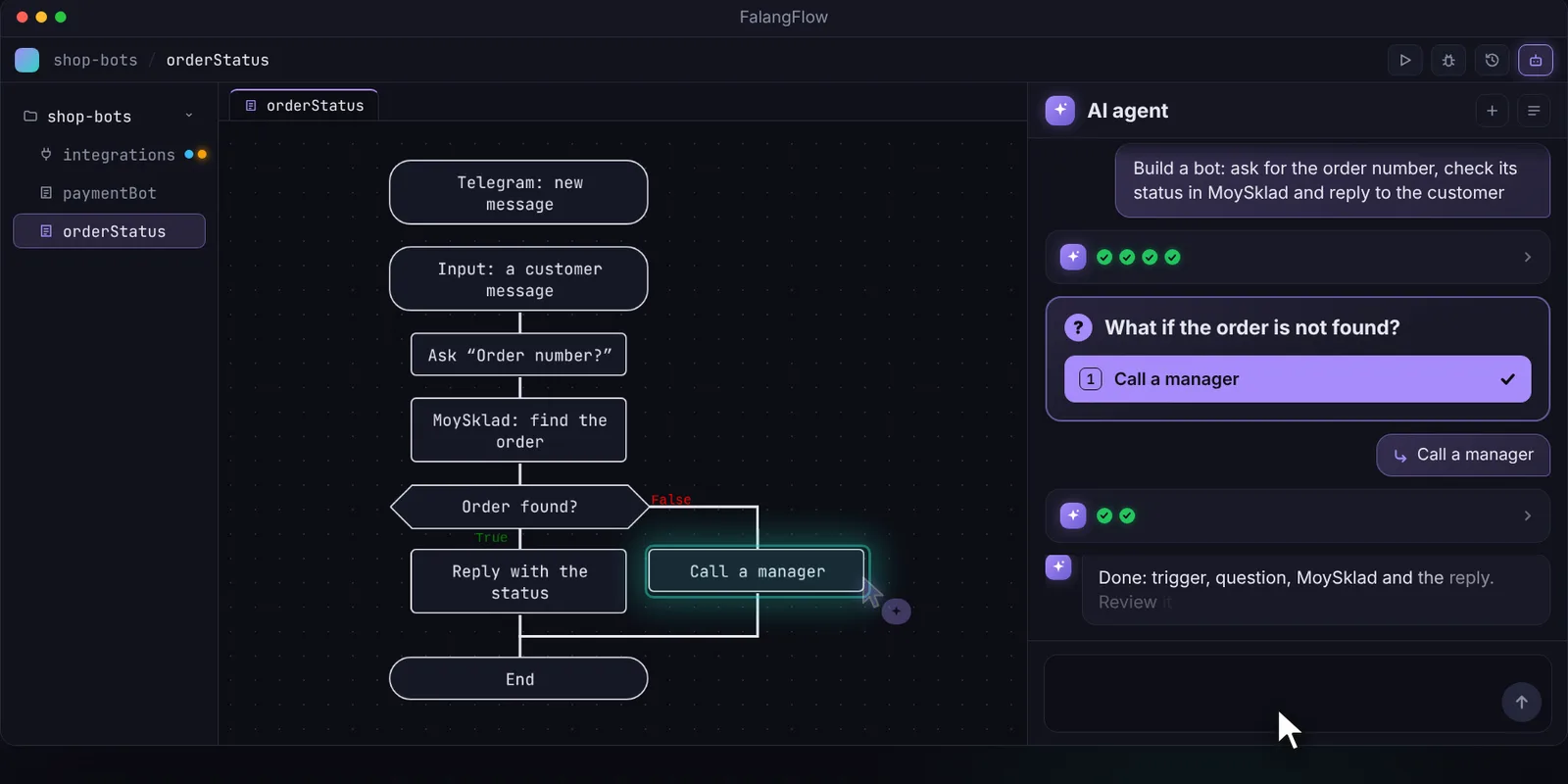
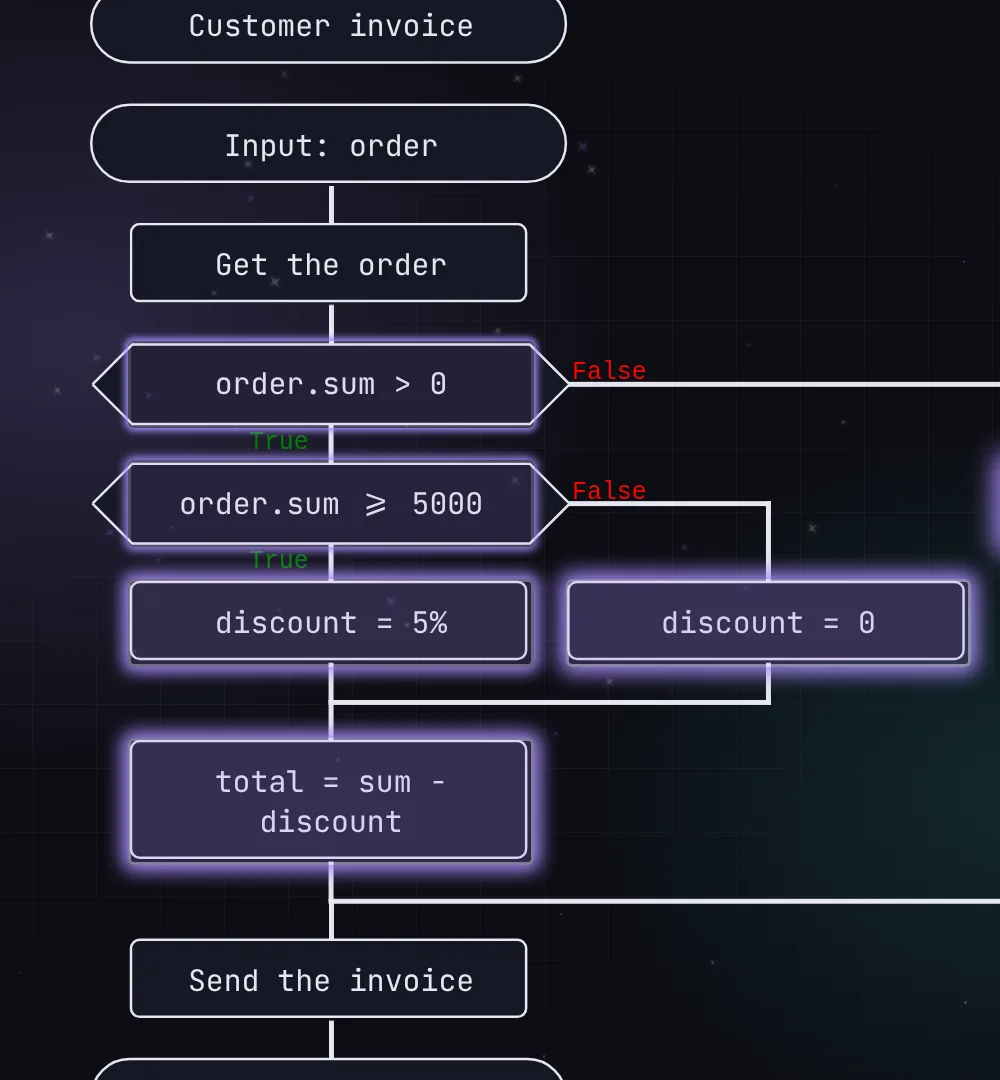
A step written in plain words
In FalangFlow, click a line and write what the step should do: “check the order total and work out the discount”. The agent builds real blocks underneath it.
- Compiles like ordinary blocks — no AI at run time
- Open the steps, edit them or unwrap them into the diagram
- Regenerate from new text in one click
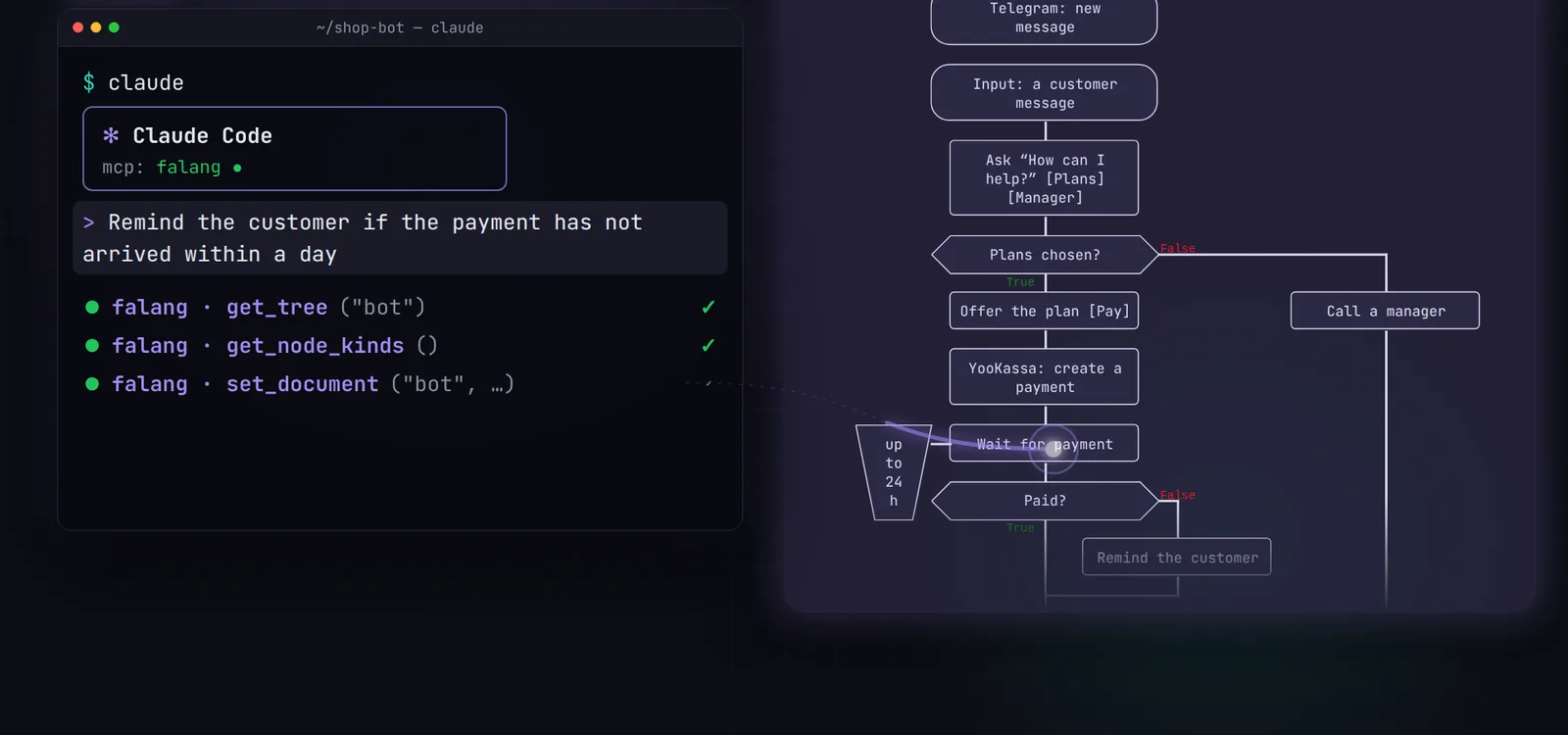
Bring your own agent over MCP
Working in Claude Code or another agent? Connect it to a project: it reads and edits diagrams, and in FalangFlow it also builds, runs and publishes.
- On your own subscription, in your own terminal
- Every change is validated — a broken diagram is never saved
- A Claude Code plugin with ready-made skills
In every product
Professional tools out of the box
A shared engine gives every product the same capabilities — from version history to a debugger.
Version history
Named versions, side-by-side comparison with changes highlighted on the canvas, and one-click restore.
Visual debugger
Breakpoints right on the blocks, the current step highlighted, variable values shown — on a test stand or a live board.
Open file format
A desktop project is a plain folder of JSON diagram files — easy to keep in git and read with other tools.
Print to PDF
Each diagram on its own sheet, with the page size picked automatically from A4 up to A1.
Works offline
The desktop apps need no account, server or internet — your projects live on your disk.
English and Russian
The interface and the docs come in two languages, switchable on the fly.
Open source
Your code, your data, your server
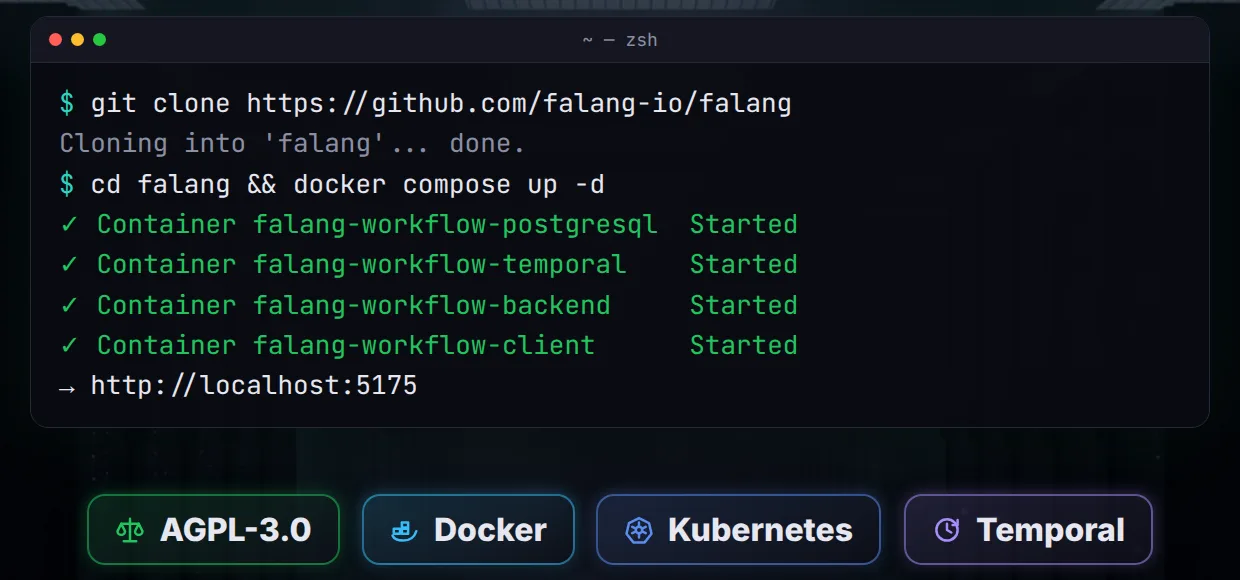
Falang is developed in the open under the AGPL-3.0 license. Every product’s source is on GitHub, and FalangFlow runs on your own machine with a single docker compose command.
- No vendor lock-in: projects are plain files
- Self-hosted FalangFlow with your own users and roles
- The agent plugin and skills are open too
Where it comes from
From the Buran spaceplane to your problems
Falang grew out of DRAKON, the visual language used to write the algorithms of the Soviet Buran spaceplane — which flew and landed fully automatically in 1988. We believe a flowchart is the most natural way to think about an algorithm, and code is what it should turn into automatically.

Start with the problem in front of you
Pick a product, browse the docs, or follow the Telegram channel — updates ship often.